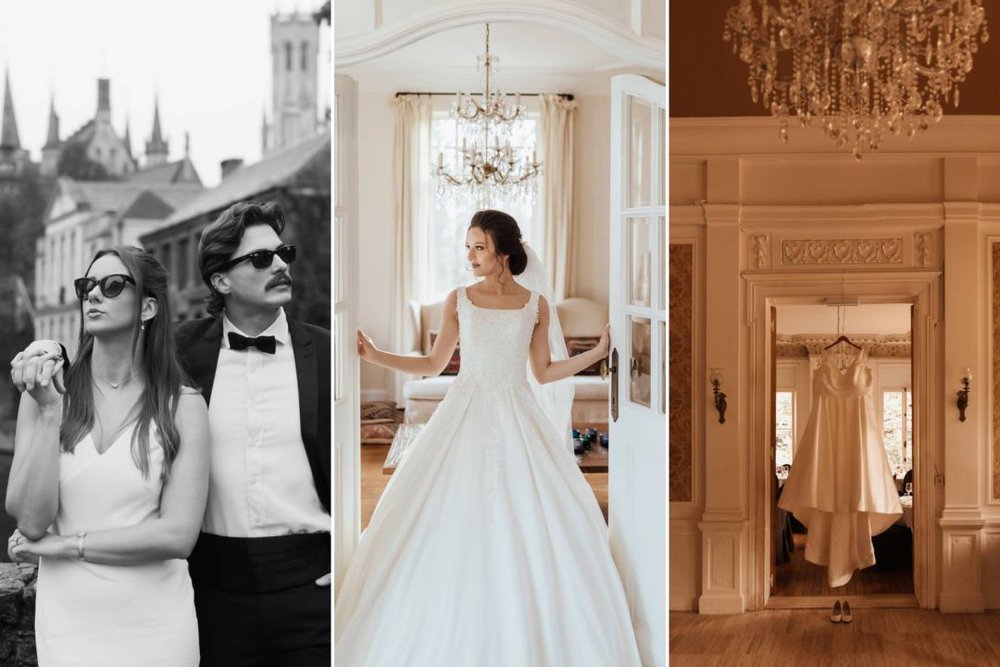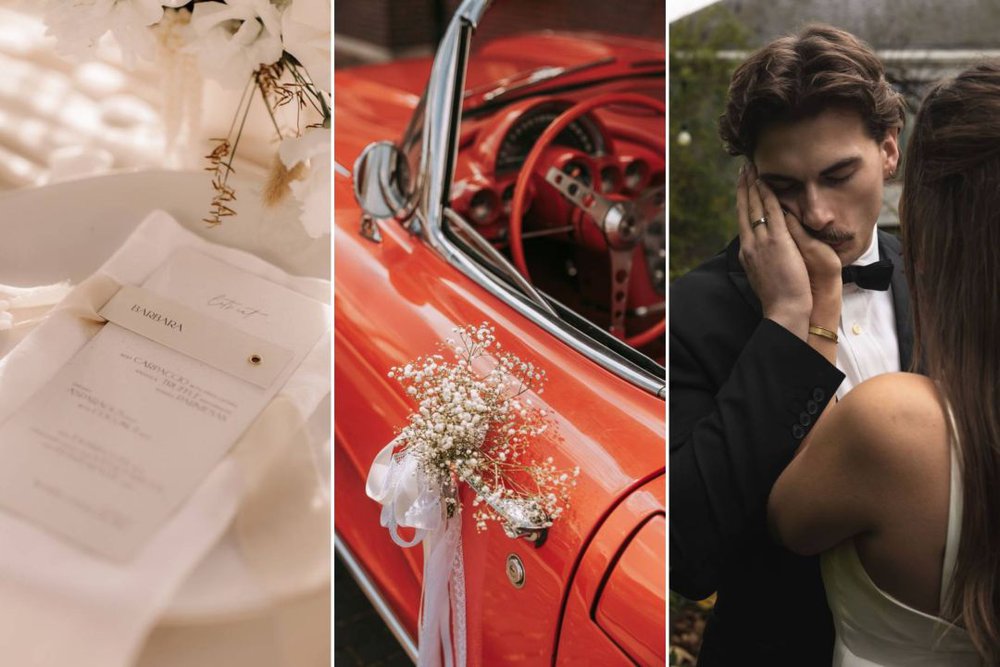
Photos (above): Photographer: Anneleen Jegers
Article in collaboration with Anneleen Jegers
Physical Touch in Wedding Photos
Physical touch often receives much attention in wedding photos—a hug, a kiss, an arm around the shoulder. Anneleen shares: “During various photoshoots with my partner, I noticed that photographers always encourage physical touch. This is not my partner’s (primary) love language, and such a photoshoot makes him feel uncomfortable. This made me wonder: why is this one love language primarily focused on in wedding photography or couple shoots?”

For some couples, love indeed lies in touch; for others, it is in words, caring for each other, or just being together. Love manifests in various forms. With this vision, Anneleen approaches every wedding today. As a documentary wedding photographer, she wants to capture couples in an authentic way, as they truly are: “I really want to give couples the space to be themselves and do things that make them happy. Not every couple wants to cuddle or pose, and that’s perfectly fine. That’s why I don’t give instructions to couples; it doesn’t feel authentic. What matters to me is that they enjoy the moment together and that their way of loving each other is palpable in the photos.” Using the five love languages as a guide, she captures what is truly meaningful for each couple — in their unique way.

What are the 5 Love Languages?
The concept of the five love languages, developed by author Gary Chapman, suggests that people give and receive love in different ways. Everyone has one or more preferred languages. The five forms are:
- Words of affirmation: showing love through words, such as compliments, letters, or vows;
- Quality time: dedicating time to each other, without distractions;
- Acts of service: showing love by doing something for the other person, no matter how small;
- Gift giving: giving meaningful gifts as a token of attention and care;
- Physical touch: expressing love through physical contact.

Many people immediately recognize themselves (or their partner) in one or more of these love languages. Some couples focus on this consciously, while others do not. Anneleen shares: “It is often the case that a couple is not (yet) aware of this, and that’s absolutely fine. It mainly changes how I view them. I see different things, and those details make the difference in my photography. I do send couples a guide beforehand explaining the five love languages so they can, if desired, consider what is important to them. How do they show their love, and how can they incorporate this into their wedding day?”

How Can Love Languages Manifest on a Wedding Day?
1. Words of Affirmation
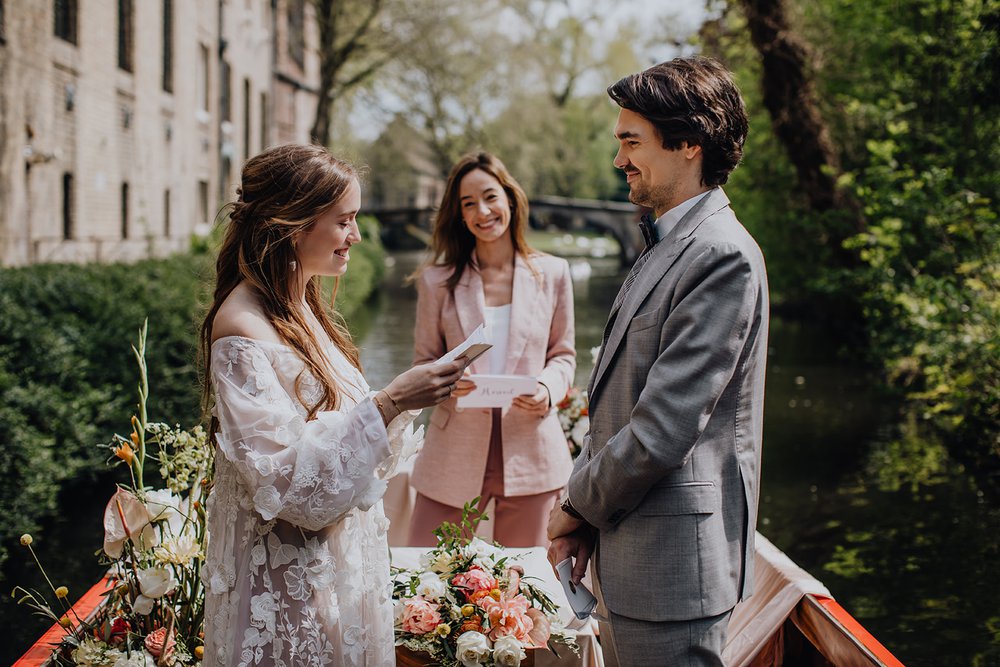
This might be the most recognizable love language on wedding days, usually expressed during the ceremony. Think vows, speeches, or a personal letter. Anneleen: “A lovely idea if this is your love language is to share your vows during the photoshoot. It not only creates beautiful images but is also meaningful for you.”

2. Quality Time
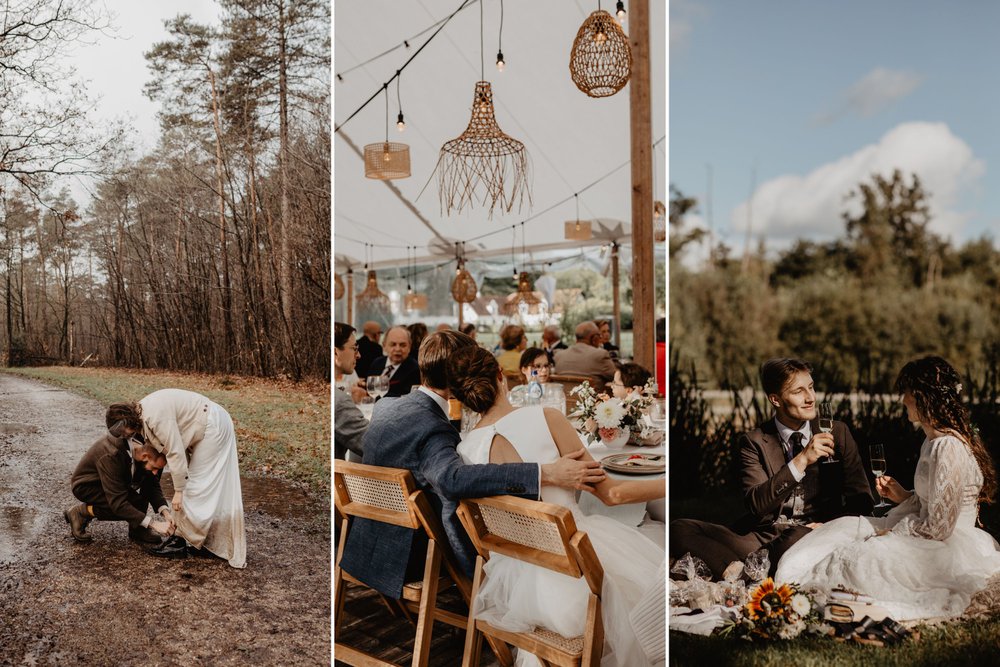
Quality time is the love language of couples who primarily feel connected by being together, without distractions. “Many couples get ready separately in the morning. However, if quality time is important to you, it could be valuable to get ready together. I once photographed a couple that had a picnic during their photoshoot. The groom read from a book—it was a beautiful moment for the two of them. Such an intimate setting speaks volumes about who they are. The picnic was also prepared by the bride’s mother (act of service), and the couple gave each other gifts there as well (gift giving).”

During one moment, multiple love languages can manifest. “These are the moments I want to capture because they say a lot about who the couple is,” Anneleen says.

3. Acts of Service
This love language often manifests in small, subtle gestures. “While getting ready, I often see one helping the other with a dress, a tie, a zipper. Or someone fetching a drink, holding the door open… These are loving actions that you can rarely stage, but I consciously look for them in my work. Recently, a couple chose to cut the entire wedding cake themselves and give each guest a piece—also a beautiful example of acts of service.”_

4. Gift Giving
This love language is not about expensive gifts, but about personal gestures. Anneleen: “I photographed a couple who didn’t want traditional thank-you gifts for their guests. Instead, the bride had set up an old ‘gumball machine’ where guests could insert a coin to receive a small gift. She had carefully chosen and wrapped each gift. This was entirely her love language. You often see this love language among guests, too: those who bring homemade, personal gifts are often ‘gift givers’.”


5. Physical Touch
Physical touch is often present on a wedding day, and Anneleen observes how it naturally unfolds. “For example, a bride gently kissing her partner’s shoulder repeatedly. Or one person attentively holding the other’s hand. These are small, tender movements that can only be captured if you have an eye for them.”

Your Wedding Day, Your Way
For some couples, the five love languages help them arrange their day in a way that truly suits them. Anneleen: “I often hear couples say: ‘We want to do our own thing.’ A ceremony, however, is often built around words. If ‘words of affirmation’ is not your love language, you can fill your ceremony differently, for example, by incorporating certain rituals or engaging in an activity with your guests. You can plant a tree, hang ribbons together, pass your wedding rings through a rope among all the guests... Such rituals can be very meaningful because they start from your story. They make your love tangible.”

There are countless creative ways to incorporate your love language into your day. The photoshoot, for example, is the ideal opportunity to do something together, if quality time is your love language. Think of a walk, a picnic, a museum visit. During your shoot and throughout your wedding day, Anneleen observes how you show love and captures everything—without directing you. Anneleen emphasizes: “I don’t want to ask the couple to do anything they wouldn’t naturally do themselves, to preserve the authenticity of a moment. They act on their own, not because I asked. This way, I capture who they truly are.”

Images Where Couples Recognize Themselves
It is precisely those small, often unnoticed details that make the difference for couples: a look, a hand gesture, a moment when their love visibly becomes their own. The feedback Anneleen receives from couples afterward is: ‘This is us. We completely recognize ourselves in these images.’_ _Anneleen: “They often mention the details, the things that typify them and how they show love. And that’s why I do it, to capture their memories on image that help cherish the day.”
Moreover, Anneleen wants to emphasize to couples that they are free to shape their wedding as they wish: “There are no rules. Every relationship is different, so every wedding day can be too.”

How Can You Integrate Your Love Language(s) into Your Wedding Day?
Would you like a wedding day that completely reflects who you are? Get inspired by Anneleen’s approach and ask yourself these questions:
- Which love languages suit us best? How do we show our love in daily life?
- How can that love become visible in the schedule of our wedding day, the ceremony, and the shoot?
- Which moments can we consciously shape to tell something about us? Are there rituals, activities, or small gestures that are truly ‘us’?

Whether you get ready together, whisper your vows during a walk, or surprise your guests with a personal ritual or gift: everything is allowed, nothing is mandatory. As Anneleen says: “Love is so much more than a kiss for the lens. It is in who you are, and in how you show it — in your way.”

Read more on this topic via these links:
- The ultimate briefing for the photographer at your wedding: be sure to discuss this
- Consider these 10 factors to find the photographer for your wedding
- This is why a good wedding photographer is indispensable
- I'm getting married! What now!? How to handle stress, pressure, and expectations when planning your wedding, according to Nina Mouton