
All photos via Unsplash
Why Namibia?
First and foremost, for its awe-inspiring natural beauty: the colourful seas of sand of the Kalahari – and the Namib Desert, the vast salt pan of Etosha Pan, or the second-longest canyon in the world, Fish River Canyon. Ideal for honeymoon photos! You’ll also come face to face with some of the world’s most endangered species: the black rhino, the cheetah, the impala, … Along the way you’ll get to know different tribes such as the San, the Herero and the Damara.
You can do a tour of Namibia as a self-drive. Hire a 4x4 and enjoy total freedom. With your vehicle, you can independently explore this remarkable, untamed and expansive country. A first challenge as newlyweds on your honeymoon? Wondering whether such a trip on your own is safe? Absolutely! Ask your travel specialist for advice and they’ll provide a hire car that makes it easy to travel around the country.
For Namibia, it’s important to book early (preferably nine to twelve months in advance). It’s a popular (honeymoon) destination and lodge availability is limited—especially if you’re looking for small-scale, romantic places to stay.
5 things to do in Namibia
1. The red sand dunes in Sossusvlei
Sossusvlei lies in the Namib Desert (vlei is South African for valley). It’s an area of red sand dunes that rise up to 300 metres high and slowly shift with the wind. Enjoy sunrise over the dunes as the temperature gradually climbs. You’ll drive past Dune 45 – the most famous one – before arriving at Big Daddy, a dune you can climb. Climbing Big Daddy can be tough. Compare it to jogging in loose sand on the beach, then add the dune’s steep incline and you’ll immediately understand it’s a serious work-out. A perfect excursion for sporty couples. Once you reach the top, the view is breathtaking: you look out over an endless dune landscape, and on the other side you’ll see Deadvlei, a dried-up salt pan. On the vlei stand the remains of trees that are certainly 900 years old.

2. Fish River Canyon
Namibia’s Fish River Canyon is said to be the second-largest canyon in the world, after the Grand Canyon. Its towering rock walls and deep ravines were formed by water erosion and the collapse of the valley due to movements in the Earth’s crust, more than 500 million years ago. Impressive!
3. Spot flamingos in Swakopmund
Swakopmund is a charming coastal town. As its name suggests, the town is of German origin. The mix of people makes it even more fascinating: descendants of German settlers live here alongside hippies and artists, dignified Herero women, rangers, miners and fishermen. During your stay in Swakopmund, be sure to visit Walvis Bay, the most important breeding area for coastal birds in southern Africa. Here you’ll see a colourful variety of birds: thousands of flamingos, white pelicans and other wading birds feast on the area’s rich feeding grounds. About 100 km north of Swakopmund lies the Cape Cross seal colony. Those with sensitive noses may find it a little challenging here.
4. Etosha National Park
Etosha is one of the largest wildlife parks in Africa. Nearly all wildlife found in Africa lives here. Large herds of elephants, giraffes, wildebeest, springbok, kudu and gemsbok share this enormous park with predators such as hyenas, lions, leopards and cheetahs. The rhino is also present here. Because the park is so large, there’s a good chance you’ll be able to observe animals without seeing other tourists. Only at the waterholes—where animals come to drink—can it be a bit busier, but it’s absolutely not disruptive.

5. Skeleton Coast
Skeleton Coast Park is part of Namib-Naukluft Park, a very dry and vast desert. The name “Skeleton Coast” was given to this park because there are many skeletons of ships and people. In the past, many ships ran aground due to the rough sea. The crew who managed to reach the coast thought they were saved, but the shipwrecked didn’t realise they had ended up in one of the driest places on Earth. A little macabre, but very impressive. Perhaps bring an extra bottle of water?
Our favourite addresses
Wolwedans Dunes Lodge
Wolwedans Dunes Lodge – where the wolves dance – is located in the NamibRand Reserve, 400 km from Windhoek and 60 km from Sossusvlei, on top of a dune plateau. In this 180,000-hectare reserve there are five intimate, evocative lodges. Wolwedans is very remote, so it’s recommended to book at least two nights here. Absolutely no hardship, given the natural splendour and tranquillity. To give you a sense of the sheer scale of the nature reserve: from the entrance gate it takes more than half an hour’s drive to reach reception. At reception you leave your car behind and a 4x4 takes you to your lodge.

Little Kulala
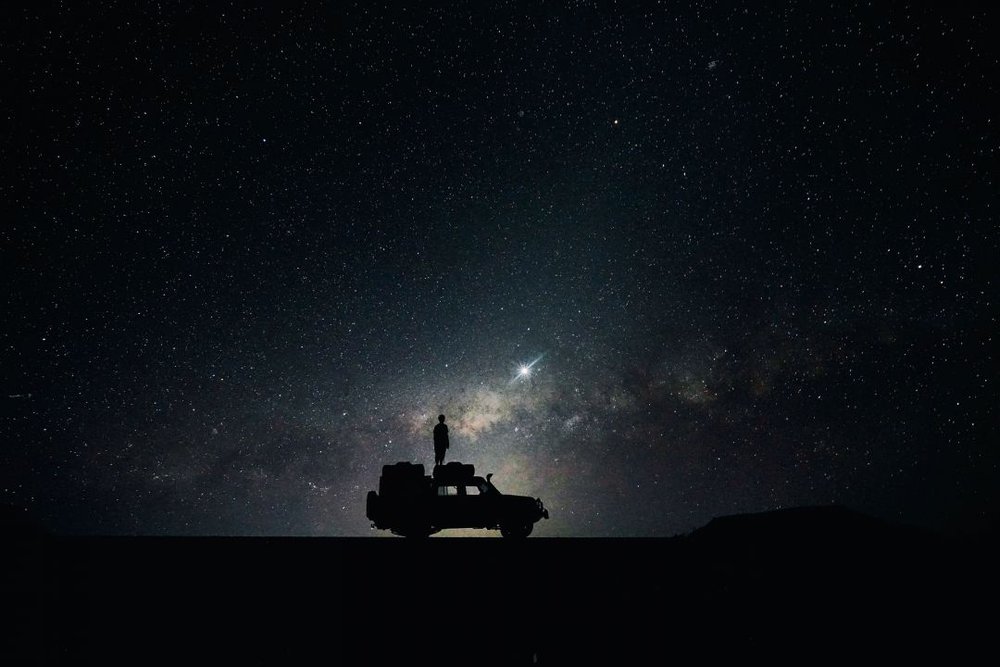
Little Kulala is situated on the dry riverbed of the Auab River and serves as a luxurious base for activities in the area. The thatched villas – each with its own plunge pool – blend seamlessly into the desert landscape. Every villa has a sky bed on the roof, so you can sleep – wonderfully romantically – under the open, starry sky. From Little Kulala you can visit the high red sand dunes of Sossusvlei. Unlike other lodges, this lodge has a private entrance to Namib-Naukluft Park. During a guided nature drive in the Kulala Wilderness Reserve, you can spot smaller game and enjoy the stunning scenery.

Tip: Book a hot-air balloon flight here and float together over Sossusvlei. A champagne breakfast will be waiting for you at the landing site. Could it get any more romantic?
Book your honeymoon with these travel agencies now
Read more about this topic via these links...