
Photo (above): Canva
Where does the term RSVP come from?
RSVP is an abbreviation of the French Répondez s’il vous plaît. It literally means ‘please reply’. An RSVP is used for things like wedding invitations, to ask your guests to confirm their attendance. After all, you want to know how many guests to expect at your wedding! That way, you can give the right numbers to your venue and caterer, among others.
The term RSVP is often used in the United Kingdom, the United States, and other English-speaking countries for invitations to weddings or other formal parties. The term first appeared in the English language in 1845. Over time, it also made its way to us. In the past, a response was only expected if the guest was unable to attend. Nowadays, people expect you to let them know either way—whether you can come or not!
What does an RSVP look like?
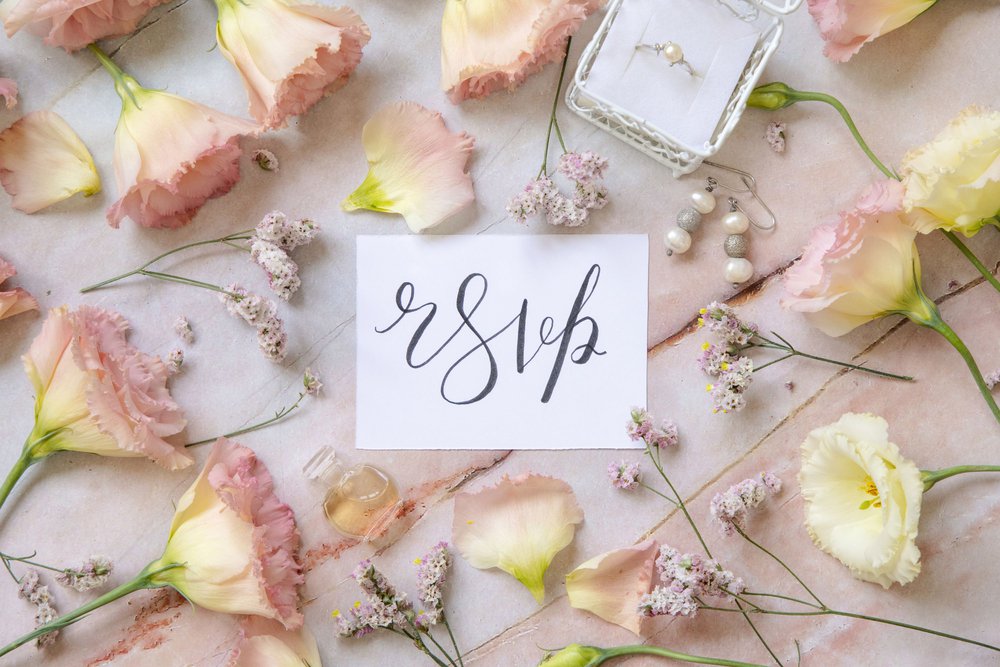
The RSVP is often a separate card that you put in the envelope with your wedding invitation. If you have different parts of the day for which not everyone is invited, it is useful to make separate RSVP cards for each part of the day. Then your guest can immediately see which part of the day they are invited to. With such an RSVP card, it is customary for the guest to indicate whether they are coming or not and then return the card to you by mail.
If you are not using a separate RSVP card, you can add a piece of text or a sentence to your wedding invitation instead. In this text, you ask your guests to confirm before a certain date, with the contact details of the person they can contact. This is likely to be your and/or your partner's cell phone number or email address, or that of your wedding planner.
Another option, which has gained considerable popularity in recent years, is to use an online RSVP. You add a link to your wedding invitation, and your guests can easily and quickly confirm their attendance online via this link. A very convenient way for you and your guests to coordinate with each other!
Would you like to know more about RSVPs? Read these articles: