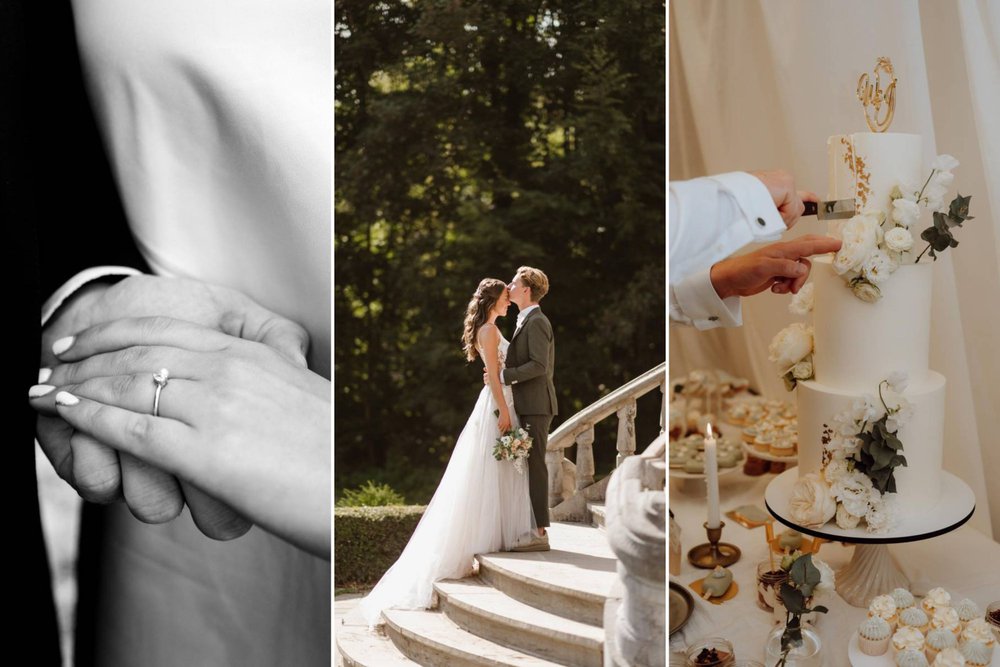
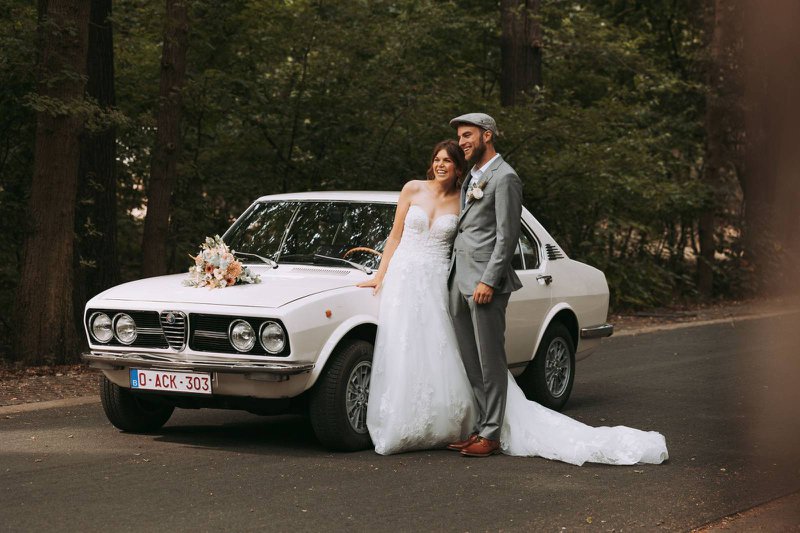
Photo (above): Photographer: Imperish Photography - Wedding Planner: Wondrous Weddings
Article in collaboration with Nina Mouton
How to handle external pressure and expectations
Engaged couples sometimes feel stress leading up to their wedding. This isn’t the intention, but it’s understandable! Nina: “It’s important to remember it’s your celebration. Yes, people might have ideas or expectations. Some couples might be influenced, leading them to feel later that they didn’t fully enjoy their day or see enough of their partner. Ask yourself: which celebration will you enjoy? A grand event in a castle or an intimate picnic in a park? On that important day, you're celebrating your love and beginning your marriage; that’s what matters. How you celebrate is entirely your choice.”
Do what you want, not what you think others expect from your wedding. Nina: “We often think—fear—that others expect more than they actually do. This can lead to an endless loop. Instead, ask yourself these questions:
‘What do you want?’
‘What does your partner want?’
‘How will you achieve that?’
‘How will you make it your celebration?’”
People mostly remember weddings that are authentic and personal to you.
How to handle internal pressure and perfectionism
The pressure you feel might come from perfectionism, a fear of failing, and the pursuit of the 'perfect wedding.' Nina: “There’s often too much pressure on the wedding. This can stem from the subconscious idea that if the wedding is good, the marriage will be too. But what is 'good'? If you're perfectionistic, this can take over the planning process. This isolates you from your partner, which is not what you want...”
We won't tell you to let go of your perfectionism. That doesn’t work, says Nina: “As a perfectionist, you’ll try to let go of perfectionism perfectly. This keeps you caught up. Perfectionism is a deep pattern that you need to recognize first. You can ask yourself: ‘Why do I want everything perfect?’ Often, there’s a fear underneath.”
How to handle the feeling that you are planning the wedding alone
Do you feel that mostly—or solely—you’re planning the wedding, and find it unfortunate? Do you wonder: “Why isn’t my partner helping?” or “Why does my partner seem less concerned?” It might help to explore why this could be. Nina lists some possible scenarios.
The protective vs. passive role
You might have a specific vision and want your wedding to happen exactly that way. You are most involved in the plans, know them best, and (unconsciously) take on a protective role. Meanwhile, your partner might take a passive role, thinking: “Nothing I say is right.”
Nina often sees this dynamic with parents: “This is known as maternal gatekeeping, where mothers, who have carried the child and gathered the most knowledge, feel they know the child best. They struggle to let someone through the 'gate.' Fathers often wait on the other side: ‘When my child crawls, then I can connect,’ or ‘When it talks, then...’. The protective mother says: ‘You’re not taking initiative,’ while the waiting father thinks: ‘You’re not letting me through the gate.’ Naming this dynamic and discussing it non-judgmentally can do a lot to work through it together.”
Different visions
It might be that your dream wedding isn’t what your partner wants. Nina: “Your partner might be introverted and uncomfortable saying vows in front of 200 people. They may experience stress trying to meet ‘expectations.’ That’s intense...”
Reaching a joint solution
Nina continues: “It’s not ‘you and me against each other.’ Instead, focus on what’s mutual: your wedding and what follows. If you’re facing off about a topic, treat that topic as mutual. Don’t see it as you against each other, but gather around the topic: ‘How will we manage this?’”
“Importantly, express concerns non-confrontationally. Say, for example: ‘I notice that planning our wedding this way stresses me out. I’d like to discuss this and figure out what you and I want, to find something that works for both of us.’”
What ultimately matters
Nina: “There’s a beautiful scene in Friends where Monica worries about the wedding budget, and Chandler says: ‘I want that party too, but I want the marriage that follows even more.’ He puts it beautifully: it’s not just about the celebration, but about ‘you and me, and our future.’”
In short, wedding planning stress often comes from the (assumed) expectations of others and the pressure we put on ourselves. Nina: “Ask yourself: what do you want? Apart from everything, what do you really want? The answer might be: ‘My partner, that day with my partner.’”
About Nina Mouton
Nina Mouton is a clinical psychologist, psychotherapist, author, speaker, columnist, and expert in gentleness, creative thinking, and motherhood. She is an authority on self-care and gentle parenting—she has written several bestseller books and created online programs about these subjects. For Nina, self-care is where everything begins: “You can only truly connect with yourself and those around you if you can take care of yourself. It all starts there. And for that, we need to truly know ourselves.”
Read more about this topic via these links: