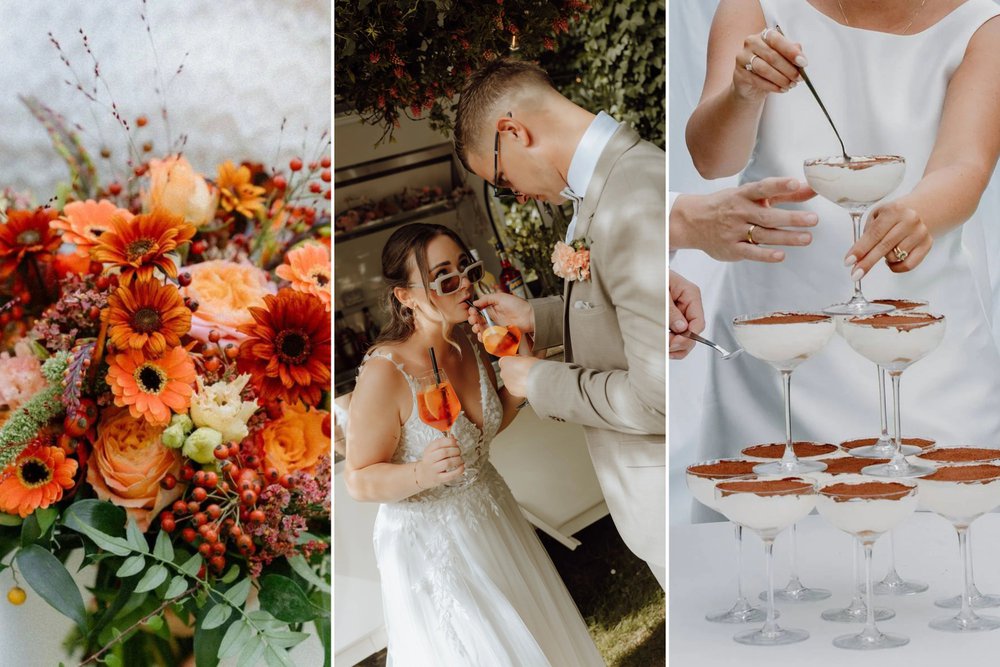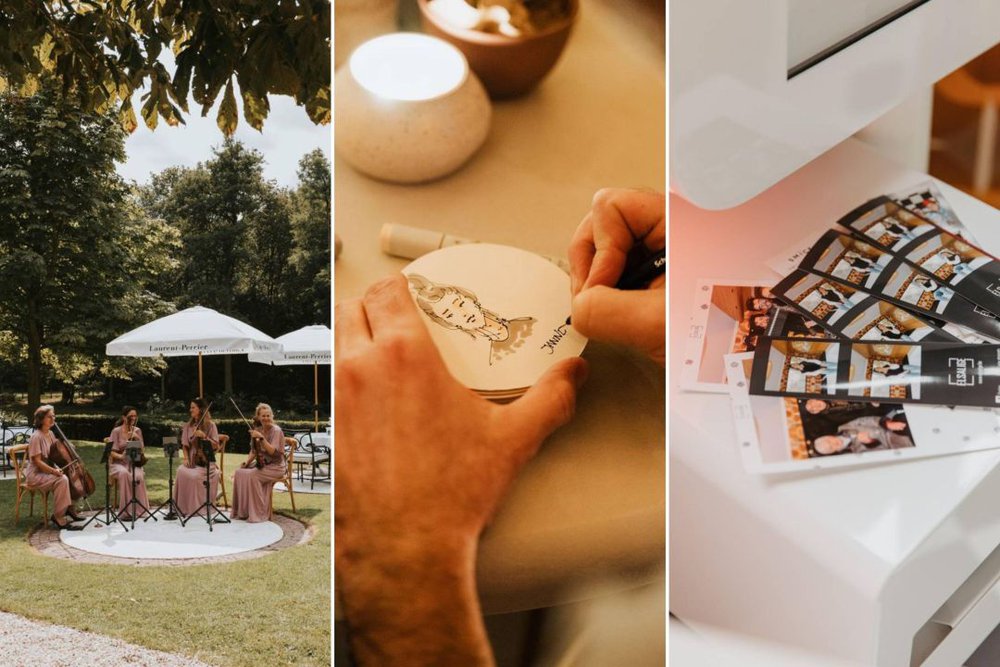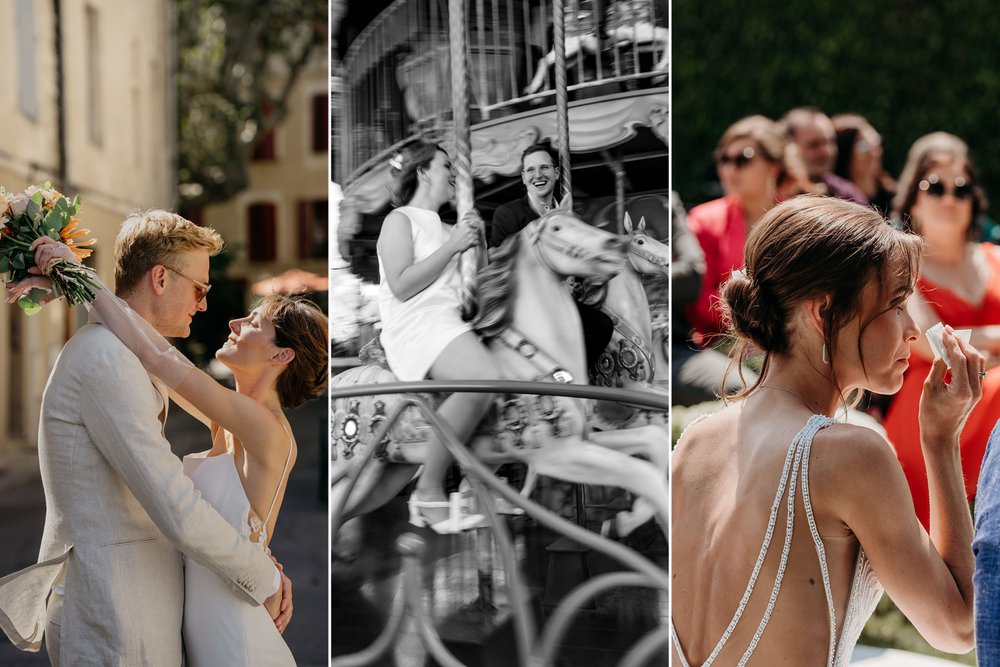
Photos (top): Photographer (left): Studio Bergh - (centre): Whoismiette? - (right): Studio Camerelle
The biggest challenge for engaged couples
When planning their wedding day, couples mainly get stuck on the guest list and who to invite or not invite (41%), keeping rising costs within budget (40%), and finding the time and mental space to plan everything alongside work and life (40%). Three challenges that weigh almost equally heavily for couples. What stands out is what comes in fourth place: 32% mention family and social expectations as the biggest challenge when planning, ahead of decision fatigue and making difficult choices (31%) and finding good vendors who are still available and affordable (24%). Only 7.6% do not notice any of these challenges and say that planning their wedding celebration is going smoothly.
When it comes to family and social circles, several factors can play a role. Our 2025 National Wedding Survey showed that 1 in 3 receives support from parents, mostly or entirely, and that for 10% the wedding celebration was fully funded by the parents. That financial support can sometimes come with expectations about who is invited or what the day looks like. There may also be another dynamic at play, for example in blended families or where there are family conflicts or tensions. Sometimes it can also be about a generational difference, where (grand)parents picture a more traditional or larger celebration, while couples themselves may choose a smaller and very personal celebration.
Couples feel the effects of global politics
Broader global politics itself scores low: 8% feel a major influence of the current economic and social context on planning their wedding, and 30% feel some influence. 28% feel no influence at all, and 35% had not thought about it yet. For the majority, global politics therefore remains in the background. Still, it does not disappear entirely. Of those who do feel an influence, 88% point to rising prices for energy, food and materials, compared with 13% who mention wars and international conflicts, and 8% who refer to blockages on international trade routes such as around the Strait of Hormuz.
For most couples, international conflicts therefore feel far away, and they seem to experience little direct impact from the geopolitical context. Even so, they do feel the consequences, and couples mainly notice a difference in their bills because of rising prices.
So what does that influence mean for how couples themselves view their wedding day? They do not doubt their vision, but many are choosing more consciously. 24% of couples say: “Our wedding remains a top priority, whatever happens”, and 52% say: “We are paying more attention to the budget, but still want our dream day”. Together, 76% of couples are therefore sticking to their wedding plans. In addition, 21% are adjusting certain wishes to stay within budget, and only 2.5% are considering postponement. For most couples, the question therefore is not whether their dream day can go ahead, but how.
Where the money goes
Those who want to save money rarely do so on atmosphere, food or visuals, as that is where people tend to spend a bigger budget. Atmosphere and experience are therefore put at the top by 47% of couples as one of the most important aspects of their wedding celebration, closely followed by food and drink (46%), photo and video (40%), having everyone who matters there (39%), the venue (38%) and party, music and entertainment (28%). On the other side of the balance, where couples would be quicker to cut back if needed, are decorations and flowers (55%), the honeymoon (52%) and clothing (22%). When it comes to the personal, individual touch, couples are most divided: 19% put it at the top, while 18% would cut back on it.
When asked which one aspect they would never compromise on, whatever happens, food and drink, and atmosphere and experience, are both far and away at the top, followed by having everyone who matters there, and photo and video.
Concrete adjustments: getting stuck in & the guest list
72% of couples consider or make adjustments that they had not initially planned. That figure is higher among those who feel influenced by the international, economic and social context (89%) than among those who do not (62%), and is at the same time a sign that adjustments are often part of the planning process anyway.
The most popular adjustments are making or doing something themselves instead of outsourcing it (40%) and having a smaller guest list (25%). Other adjustments that some couples choose include buying second-hand, hiring or borrowing instead of buying new (18%), cutting back on the honeymoon (18%), switching to cheaper suppliers (17%), choosing a smaller or simpler venue (13%), setting a lower overall budget (12%), not getting married in peak season (summer) or at the weekend, but on a cheaper weekday, date or in a cheaper season instead (11%), postponing the wedding date (6%), and using fewer suppliers (5%). Almost 3 in 10 couples (28%) end up changing nothing about their original plans.
No other theme comes up as often as the guest list: one of the most important aspects of their celebration, where couples often do not want to compromise, and at the same time one of the biggest challenges in planning, and the second most popular concrete adjustment when needed. In general, couples find it difficult to decide who to invite and who not to invite, who gets a plus one, and how to make sure no one feels left out. Part of the difficulty is budget-related: every extra name on the guest list has a direct impact on the cost, from the number of place settings to the size of the venue. And it is not just a matter of money, putting together the guest list is also an emotional exercise, in which couples have to decide who they really can and want to ask, without offending others.
The wedding budget today
Couples estimate a realistic wedding budget in 2026 at an average of €28,285, with maximum amounts rising to around €350,000. This is in line with the results of our 2025 National Wedding Survey, which came in at around €30,000.
For 44%, the final budget ends up higher than planned. 33% of couples saw their budget increase by 10 to 30%, and 11% saw it rise by more than 30%. For 25% of couples, the budget stayed roughly as expected, and 26% had no specific amount in mind beforehand. Only 3% managed to save deliberately compared with what they had initially in mind.
Couples who decide early in the process what they do not want to compromise on, and what can be simpler for them, plan more realistically and can choose more targeted wedding suppliers that fit their budget and priorities. House of Weddings remains a trusted guide and quality label, from first inspiration to finding reliable vendors, who always think along smartly with your wishes and budget.
In short
Couples are making more conscious choices today. In doing so, they are sticking to what will really make their celebration complete: the atmosphere and experience, food and drinks, and having everyone who truly matters there. What concerns them most is closer to home than world news: not international conflicts, but the guest list, the budget and their family. Even so, international conflicts do play a role, although couples mainly feel the impact of them on their bills. For most couples, marriage will remain a top priority in 2026, and they plan their celebration with a sharp eye for what really matters to them.
Good luck!
About the respondents
These figures come from a survey by House of Weddings among wedding couples at different stages of their wedding planning, carried out over three weeks in June-July 2026. 33% of respondents have just started dreaming and planning, 32% are in the middle of organising things, 14% are just before their wedding day, and 21% are now married. The majority are therefore still very much in the active planning phase.